

If your AI stack is locked to one vendor in 2026, you're not running a strategy.
If your AI stack is locked to one vendor in 2026, you're not running a strategy. Two open-weight releases in the last few days are really highlighting why a single-vendor AI stack is a liability. On April 20th, Moonshot released Kimi K2.6…
If your AI stack is locked to one vendor in 2026, you're not running a strategy.
Two open-weight releases in the last few days are really highlighting why a single-vendor AI stack is a liability.
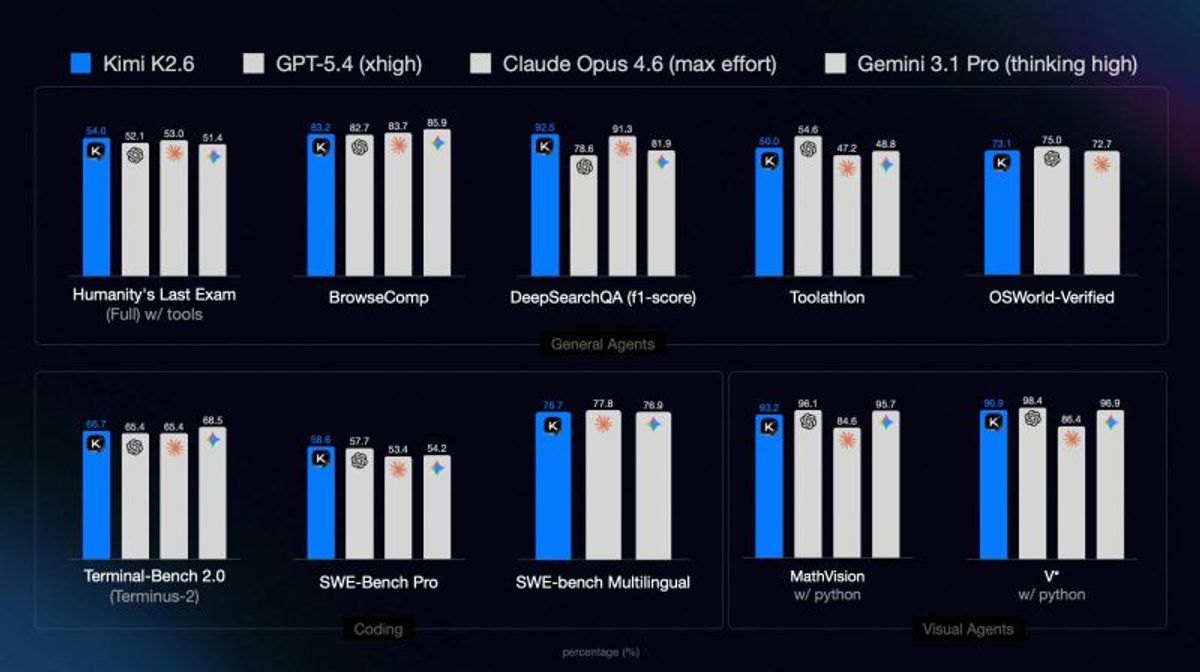
On April 20th, Moonshot released Kimi K2.6: an open-weight model that scored 58.6 on SWE-Bench Pro. GPT-5.4 scored 57.7. Claude Opus 4.6 scored 53.4. Gemini 3.1 Pro scored 54.2. You can download the weights.
A day later, Alibaba shipped Qwen3.6-27B, which is rivaling flagship models like Opus.
These are both models you can host yourself. You control your pricing, no more fluctuating API costs.
Meanwhile, Anthropic killed flat-rate enterprise pricing this year and moved Claude and Claude Code to per-token billing. OpenAI metered Codex in early April.
The argument about "which model is best" assumes you pick one and stay there. That was never a good architecture decision, and it's a worse one now. The companies getting this right aren't self-hosting everything. They're building a gateway. Route requests by quality-per-dollar. Cheap model for classification. Frontier model for synthesis. Open-weight fallback when rate limits hit or prices change. 37% of enterprises now run 5 or more models in production. Routing cuts costs 40-85% versus single-model shops.
Businesses that treated "we use GPT-4" as an architecture decision in 2023 are the ones paying the migration cost today. Don't lock in what comes next the same way.
Is your AI stack actually swappable, or is "model-agnostic" just a line in your slides?